
Balochistan: Democratic Republic of Balochistan
Balochistan
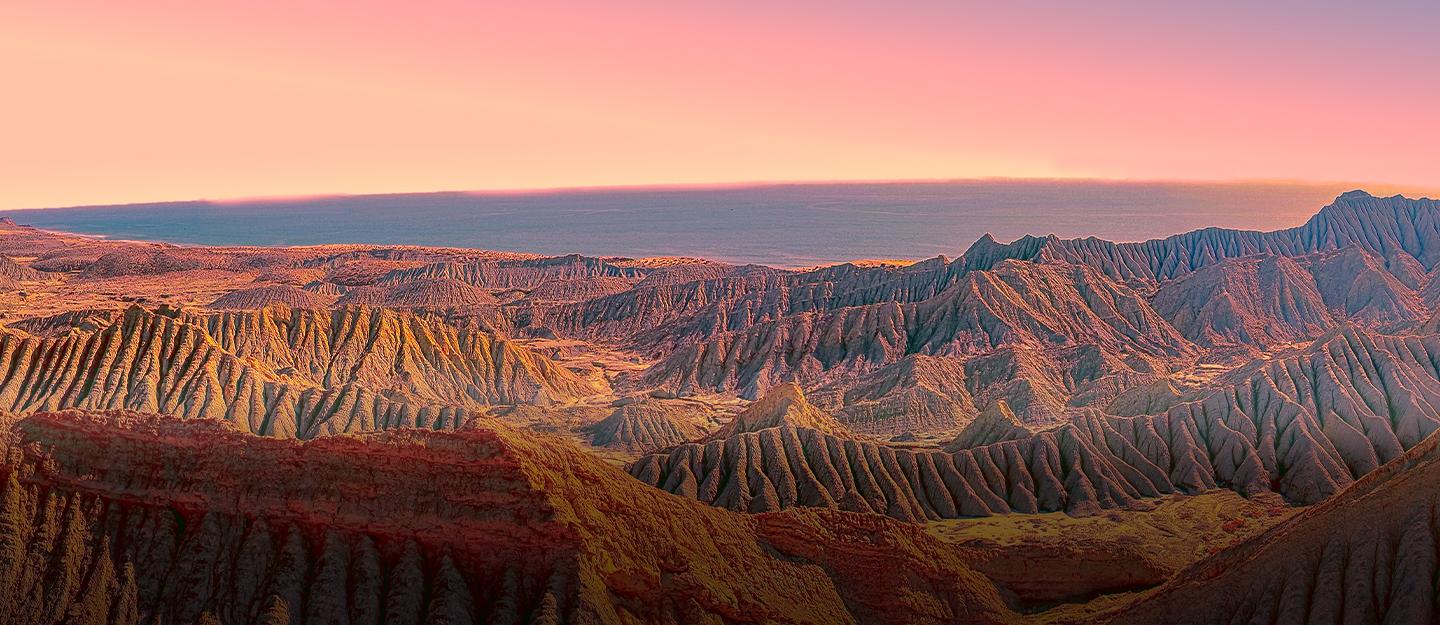
Balochistan — Pakistan’s largest yet most neglected province — remains a region where natural wealth contrasts sharply with human deprivation. Indeed, it stretches from the Arabian Sea to the deserts bordering Iran and Afghanistan, forming a land that is rich in minerals, gas, and geography. However, despite these abundant resources, it continues to be poor in trust, development, and representation.
For decades, the province has consequently stood at the heart of political rebellion and state suppression. Moreover, the persistent call for autonomy or independence has echoed from the mountains of Dera Bugti to the streets of Quetta. Thus, Balochistan symbolizes a paradox — a land of immense potential struggling endlessly for recognition and justice.

Historical Perspective
Ancient Civilizations and Tribal Foundations
The story of Balochistan predates modern borders. Archaeological evidence from Mehrgarh (c. 7000 BCE) in the Bolan Pass reveals one of humanity’s earliest farming settlements.
Over centuries, nomadic and semi-nomadic Baloch tribes migrated from the Iranian plateau into the region, developing a deeply tribal, honor-based social structure.
Leaders like Mir Chakar Khan Rind (15th century) became legendary for uniting tribes and defending local autonomy — setting an enduring precedent for collective resistance.
British Colonization and the Kalat Question
By the late 19th century, British India recognized Balochistan’s strategic importance for controlling trade routes and guarding against Russian expansion.
The British established the Balochistan Agency (1876) and placed the princely states — Kalat, Makran, Las Bela, and Kharan — under indirect control.
While the tribal khans retained nominal authority, real power shifted to the colonial administration — sowing the first seeds of political discontent.
Partition and the Forced Accession
In 1947, as the British withdrew, Kalat declared independence — a position it claimed was supported by prior treaties recognizing its sovereignty.
However, under political and military pressure, the Khan of Kalat signed the Instrument of Accession to Pakistan on 27 March 1948, against the wishes of many Baloch leaders and tribes.
This event is viewed by many Baloch nationalists as an annexation, not accession — a moment that permanently altered the region’s trajectory.
Balochistan: Cycles of Rebellion and Political Turbulence
The First Insurgencies (1948–1970)
The first rebellion indeed erupted within just a few months of Pakistan’s creation, led by Prince Abdul Karim, the Khan’s own brother. Moreover, this early resistance set the tone for decades of tension between Baloch nationalists and the central government.
Subsequently, uprisings in 1958–59 and 1963–69 emerged as a result of Islamabad’s continued centralization efforts — particularly through the controversial “One Unit” policy, which merged all provinces into a single administrative entity and, therefore, diluted Balochistan’s distinct identity.
Ultimately, each uprising reflected the same underlying grievances: the loss of sovereignty, systematic resource exploitation, and the denial of genuine political agency. Thus, the pattern of rebellion became a recurring response to perceived injustice and exclusion.
The 1973–77 Uprising: The Longest and Bloodiest
When Prime Minister Zulfikar Ali Bhutto dismissed Balochistan’s elected government in 1973, it sparked a massive insurgency involving thousands of tribal fighters from the Marri, Mengal, and Bugti tribes.
The military’s counterinsurgency campaign resulted in thousands of deaths and mass displacement, leaving deep emotional and social scars.
The Fifth Insurgency (2004–Present)
Tensions reignited in the 2000s with new infrastructure projects — particularly the Gwadar Port and the China–Pakistan Economic Corridor (CPEC) — which many Baloch saw as benefiting outsiders while excluding locals.
The killing of veteran nationalist Nawab Akbar Khan Bugti in 2006 by the Pakistan Army triggered the fifth insurgency, giving rise to modern separatist outfits like the Balochistan Liberation Army (BLA) and Baloch Republican Army (BRA).
The Roots of Unrest
Political Marginalization
Repeated dismissals of provincial governments and interference from Islamabad have eroded local trust.
Despite constitutional guarantees, decision-making remains centralized, and provincial assemblies have limited authority over security or resource allocation.
Economic Exploitation
Balochistan produces much of Pakistan’s natural gas, yet its own districts suffer from energy poverty and unemployment.
Revenues from Sui gas fields, discovered in 1952, primarily benefit Punjab and Sindh, while Dera Bugti — where the gas originates — remains underdeveloped.
Locals perceive Gwadar Port and CPEC as extensions of the same exploitation — national prosperity built on regional deprivation.
Human Rights and Militarization
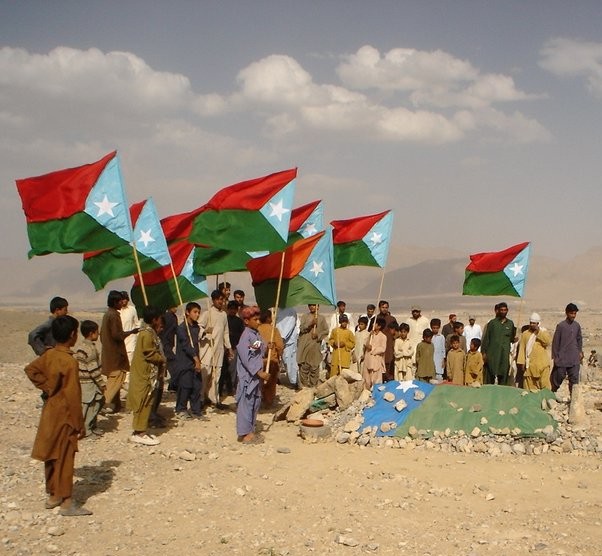
Reports of “enforced disappearances” have, indeed, become the defining feature of the ongoing conflict. According to several human rights organizations, thousands of students, activists, and journalists have consequently vanished after allegedly being picked up by security agencies. Moreover, many families continue to search tirelessly for their loved ones for years, holding vigils and protests in the hope of even a trace of information.
However, the government, meanwhile, continues to dismiss these allegations, arguing instead that the unrest is primarily driven by “foreign-backed terrorism.” Thus, the contrasting narratives between the state and the victims’ families further deepen mistrust and prolong the cycle of pain and resistance.
Geopolitical Crossroads
Bordering Iran and Afghanistan, Balochistan’s geopolitical position adds complexity.
Iran’s own Baloch minority faces similar struggles, leading to cross-border kinship — and, occasionally, suspicion from both Islamabad and Tehran.
The Quest for Independence
The Dream of a Separate State
The Baloch nationalist ideology centers on the belief that Balochistan is a distinct nation — ethnically, linguistically, and culturally separate from Pakistan.
Groups like the Free Balochistan Movement (FBM) and Baloch National Movement (BNM), largely led from exile, have called for full independence and international recognition.
These movements argue that autonomy is insufficient given the history of unfulfilled promises and continued militarization.
Balochistan: The 2025 Declaration of Independence
On May 9, 2025, activist and writer Mir Yar Baloch boldly announced the formation of the Democratic Republic of Balochistan, thereby urging the United Nations and the wider international community to recognize the region’s long-contested sovereignty. Indeed, this declaration, though largely symbolic, nevertheless reignited a global debate about Balochistan’s enduring struggle for self-determination. Moreover, it brought renewed attention to the decades-old grievances that have fueled unrest across the province.
However, Islamabad swiftly dismissed the announcement as mere “propaganda.” Yet, for many Baloch, the declaration represented far more than rhetoric; rather, it marked a powerful moment of collective pride and political assertion. Ultimately, the episode served as a reminder that the demand for recognition, even when symbolic, can profoundly influence both domestic narratives and international discourse.
Prominent Leaders in the Baloch Struggle
Male Leadership
| Leader | Role & Legacy |
|---|---|
| Nawab Akbar Khan Bugti | Tribal chief and political leader; his death in 2006 reignited the modern insurgency. |
| Khair Bakhsh Marri | Marxist ideologue; symbol of the 1970s armed struggle. |
| Mir Ghaus Bakhsh Bizenjo | Advocate of political reconciliation and provincial autonomy. |
| Mehran Marri | Exiled head of United Baloch Army; active in international lobbying. |
| Mir Yar Baloch | Declared the “Democratic Republic of Balochistan” in 2025. |
Female Leadership: The Voices of Courage
Despite patriarchal traditions, Baloch women have emerged as the conscience of the movement — leading protests, advocating human rights, and giving voice to the disappeared.
| Leader / Activist | Contribution |
|---|---|
| Mama (Mahrang) Baloch | Doctor, activist, and face of the “Baloch Missing Persons” movement. She leads marches demanding justice for the disappeared and symbolizes defiance against state repression. |
| Karima Baloch (1983–2020) | Prominent exiled activist and leader of the Baloch Student Organization (BSO). Advocated for Baloch rights globally; found dead in Canada in 2020 under mysterious circumstances. |
| Farzana Majeed Baloch | Sister of missing activist Zakir Majeed; co-founder of the Voice for Baloch Missing Persons (VBMP); international human rights campaigner. |
| Sammi Deen Baloch | Young activist and daughter of a disappeared person; continues to lead marches and raise awareness through global media platforms. |
| Banuk Karima Shahi | Social activist promoting education and rights for Baloch women and children in conflict zones. |
These women transformed personal pain into public protest, broadening the Baloch struggle from tribal resistance to a human rights and justice movement recognized globally.
Balochistan Today: Conflict and Complexity
Security Situation
Balochistan remains volatile, with frequent clashes between security forces and militant groups.
In 2025, a suicide bombing in Naushki killed several Pakistani soldiers — claimed by the BLA. Meanwhile, cross-border strikes by Iran targeting alleged militant camps have heightened regional tension.
Despite official denials of any “insurgency,” violence remains endemic.
Civil Resistance and Human Rights Activism
Movements led by Mahrang Baloch, Sammi Deen, and several other activists have indeed transformed the conflict narrative, gradually shifting it from militancy to civil disobedience and peaceful protest. Moreover, their persistent efforts have encouraged many within Baloch society to replace armed resistance with calls for justice through nonviolent means.
Consequently, long marches to Islamabad and a series of global awareness campaigns have brought Balochistan’s plight to the forefront of international attention. As a result, major organizations such as the United Nations and Amnesty International have begun to express increasing concern over reports of enforced disappearances and human rights abuses. Thus, the Baloch struggle has evolved from a regional insurgency into a broader human rights movement resonating far beyond Pakistan’s borders.
Economic Inequality and Alienation
While Islamabad touts development projects under CPEC, many locals view them as tools of exploitation.
Gwadar’s fishermen, displaced for port expansion, rarely see the benefits promised in government plans.
Unemployment and poverty persist — more than 70% of the population lives below the poverty line.
Divided Demography and Politics
Northern Balochistan’s Pashtun-majority areas often align with mainstream Pakistani politics, while the southern and central districts remain centers of nationalist sentiment.
This demographic division complicates the movement’s unity and the prospects for independence.
Challenges and Future Pathways
Obstacles to Independence
- Lack of International Support: No major power recognizes Balochistan’s independence claim.
- Fragmented Leadership: Multiple factions pursue competing strategies — armed struggle vs. diplomacy.
- Military Control: Pakistan maintains overwhelming security presence across the province.
- Economic Fragility: A future Balochistan would face immediate governance and resource management challenges.
Reconciliation and Reform
Lasting peace requires a shift from militarization to dialogue. Possible pathways include:
- Provincial Autonomy — ensuring control over natural resources and revenues.
- Inclusive Development — involving locals in economic planning and CPEC projects.
- Human Rights Accountability — addressing disappearances and rebuilding trust.
- Cultural Recognition — promoting Balochi language and identity through education and media.
- Women’s Empowerment — amplifying female leadership as a cornerstone of peacebuilding.
Balochistan’s history is, indeed, one of endurance — a land where ancient civilization seamlessly meets modern struggle. Over the centuries, from tribal leaders to young women activists, every generation has continually redefined what it means to be Baloch: proud, resilient, and unwilling to be silenced.
Although the May 2025 declaration of independence did not physically redraw borders, it nevertheless revived an old truth — that genuine peace and stability cannot be built on repression. Moreover, it reminded the world that identity and dignity often outweigh political convenience.
For Pakistan, acknowledging Balochistan’s grievances is not weakness but rather an act of wisdom and foresight. Conversely, for the Baloch people, balancing the dream of absolute freedom with the realities of pragmatic politics remains the greatest challenge of this century.
Ultimately, until both sides fully embrace justice, representation, and equality, the mountains of Balochistan will, therefore, continue to echo with the cries of a people seeking not war — but recognition and respect.