
India–UK Partnership 2025: Strengthening Bonds
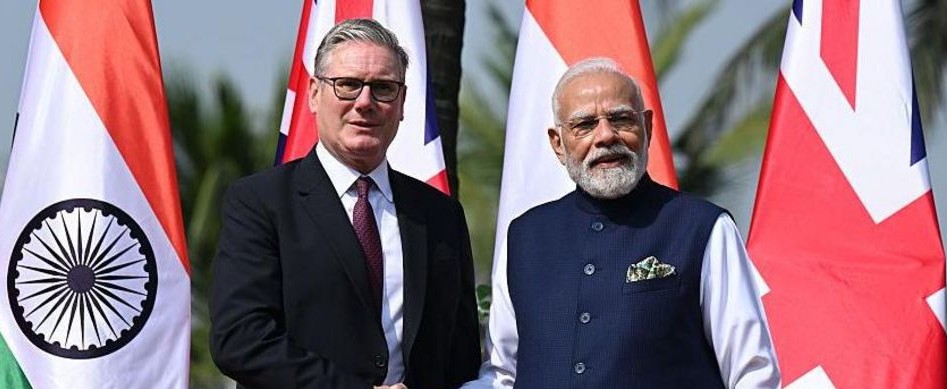
India and the United Kingdom have built a robust bilateral relationship as part of the India–UK Partnership. They share democratic values, collaborate on economic initiatives, and pursue global aspirations together. Recently, UK Prime Minister Keir Starmer visited India for a landmark meeting hosted by Indian Prime Minister Narendra Modi. This meeting marks a transformational moment as both countries strengthen ties in trade, technology, defence, education, and innovation, setting a promising direction for India’s advancement.
The Historic Backdrop and Strategic Significance
Prime Minister Starmer arrived in India on October 8–9, 2025, for his first official visit as UK leader. Earlier, Prime Minister Modi traveled to London in July 2025, leading to the signing of the India–UK Comprehensive Economic and Trade Agreement (CETA). India initiated this engagement to boost its economic and geopolitical profile amidst evolving global dynamics, tariff disputes, and the need for strategic alliances.
India’s Perspective: Why This Visit Matters
India valued PM Starmer’s visit and welcomed his delegation of ministers, business leaders, and university representatives. Leaders in Mumbai met during the Global Fintech Fest to highlight India’s achievements in fintech innovation and investment. The government viewed the UK’s agreements as validation for its efforts to attract foreign investors, accelerate digital transformation, and promote technological progress for younger generations and local industries.
- India acknowledged the UK delegation’s size and stature as evidence of its growing economic strength.
- Leaders focused on advancing technology, innovation, and education, supporting India’s “Digital India” and “Skill India” campaigns.
Key Deals and Decisions: What Was Agreed
The India–UK Comprehensive Economic and Trade Agreement (CETA)
This agreement reduces tariffs and opens new market access for both countries. Indian businesses now export textiles, cars, and whiskey to the UK with fewer barriers. UK exporters gained wider access to India’s growing consumer base. Leaders expect this trade deal to double bilateral trade from the current $56 billion well ahead of schedule.
- India agreed to lower tariffs for UK whiskey, gin, and automobiles, and the UK allowed Indian textiles duty-free access.
- India secured labor mobility provisions, enabling more professionals to work abroad, and social security exemptions make such opportunities more affordable.
Defence and Security Partnership: Missile Deal
India signed a £350 million ($468 million) contract to purchase UK-manufactured lightweight missiles (LMM) for the Army. This deal strengthens air defence and moves India closer to more diversified and self-reliant procurement paths under the ‘Atmanirbhar Bharat’ initiative.
- Both countries committed to transfer technology and jointly develop complex weapon systems for future needs.
- The deal creates over 700 UK jobs while opening new partnership opportunities for India’s defence sector.
Cutting-Edge Innovation and Technology
India launched the India–UK Connectivity and Innovation Centre and the Joint Centre for AI. The nations expanded the UK-India Critical Minerals Supply Chain Observatory at IIT-ISM Dhanbad to secure supply chains crucial for electric vehicles and renewable energy. Industry leaders also formed the Critical Minerals Industry Guild to drive green technology promotion.
Education and Knowledge Exchange
India approved UK universities like Lancaster and Surrey to establish campuses in Bengaluru and GIFT City, which accelerates India’s progress toward world-class higher education. Leaders cultivated knowledge transfer and enhanced India’s global academic reputation.
- Researchers signed new partnerships for health, climate, and biomedical innovation, including the Phase-III Bio-Medical Research Career Program.
- India anticipates UK campuses will generate jobs, deliver advanced curricula, and attract top talent.
Trade and Investment Outcomes
The India–UK CEO Forum convened, and economic committees reset priorities while pledges of significant investment followed:
- Indian companies announced more than £1.3 billion ($1.73 billion) in planned UK investment, generating almost 7,000 jobs.
- India and the UK created a joint Climate Technology Startup Fund with support from the State Bank of India to foster innovation.
Climate Action and Renewable Energy
Both governments formed an Offshore Wind Taskforce and intensified collaboration in critical minerals and green supply chains. These steps accelerate India’s renewable energy transition and secure resources for essential technologies.
Geopolitical and Strategic Dialogue
Both sides pledged to uphold a rules-based global order, reinforce maritime security in the Indo-Pacific, and deepen regional cooperation. The UK expressed strong support for India’s bid for permanent UN Security Council membership, recognizing India’s global leadership role.
India’s Gains and Opportunities
India’s leaders identified new trade routes, advanced defence capabilities, expanded educational partnerships, and strategic climate and technology alliances as real gains. These agreements motivate India’s push to become a global center for manufacturing, research, and innovation.
- India will sell more goods abroad at competitive rates, driving export-sector growth.
- Defence and technology deals nurture “Make in India” projects, invest in talent, and boost employment.
- Education and research tie-ups make India an appealing destination for global scholars.
The 2025 summit between the Indian and UK Prime Ministers delivers more than diplomatic success. It defines a detailed blueprint for a deeper, more dynamic India–UK Partnership amid global uncertainty. Visionary deals in trade, technology, education, and defence present new opportunities for growth and global engagement, highlighting India’s strategic importance internationally.
India stands ready to benefit from these agreements, transform challenges into new opportunities, and strengthen its position as an influential player in global trade, innovation, and strategic affairs.