
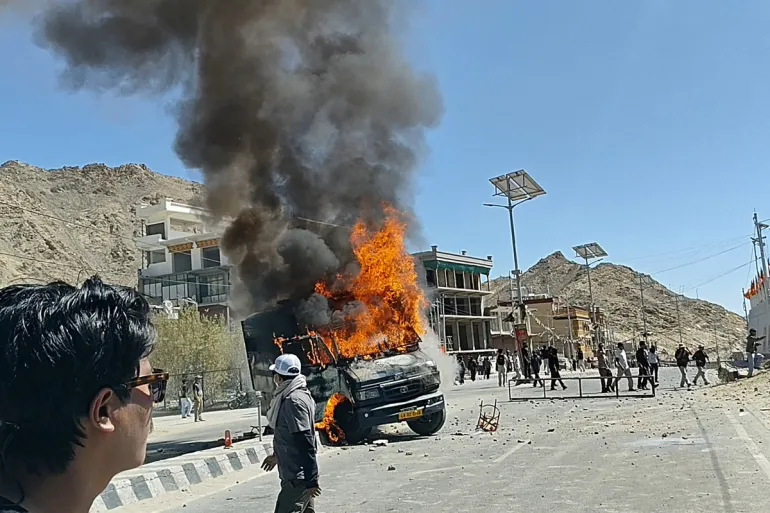
Leh in Turmoil: Unrest and Protests Shake the Himalayan Town
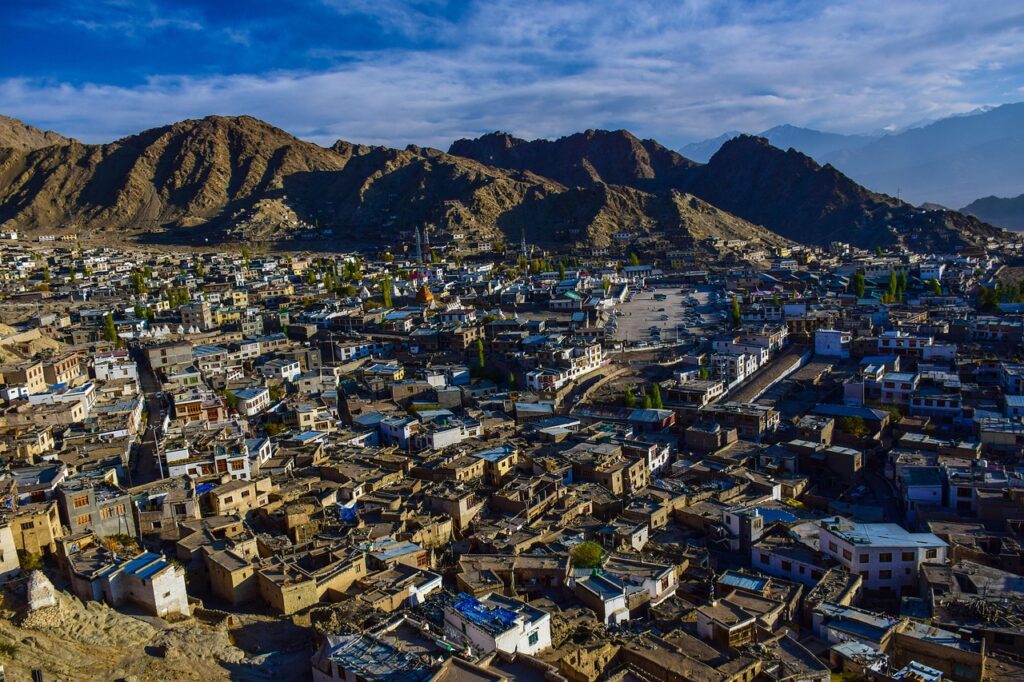

Leh, the scenic capital of Ladakh, is currently engulfed in a wave of intense protests that have turned violent, marking one of the darkest chapters in its recent history. The unrest stems from deep-seated political and social grievances, as locals demand statehood and special constitutional protections to safeguard their identity, culture, and rights. The explosion of anger among the youth, especially Generation Z, has transformed peaceful demonstrations into clashes with security forces, resulting in casualties and a strict curfew.
Leh : Longstanding Demands for Autonomy
For years, Ladakh has sought greater political autonomy due to its unique demographic and cultural makeup, where over 90% of the population belongs to Scheduled Tribes. Following the restructuring of Jammu and Kashmir in 2019, Ladakh became a Union Territory directly governed by the central government, without an elected legislature. This change intensified calls for the implementation of the Sixth Schedule of the Indian Constitution, which offers tribal regions special legislative and financial autonomy through autonomous councils. The demand also includes separate Lok Sabha representation and job reservations to address unemployment and protect local interests.
Leh Spark: Hunger Strikes and Rising Tensions
The current protests gained significant momentum with a 35-day hunger strike led by climate activist and educator Sonam Wangchuk, who campaigned for statehood and the Sixth Schedule status. The movement was peaceful for weeks, but tensions escalated when two elderly hunger strikers were hospitalized due to deteriorating health. This event galvanized young people across Ladakh, who staged a shutdown and protests in Leh to show solidarity. What began as a peaceful shutdown soon spiraled into violence fueled by frustrations over unemployment and political neglect.
The Violent Climax: Deadly Clashes and Arson
On September 24, 2025, protests in Leh turned violent. Demonstrators set fire to the Bharatiya Janata Party (BJP) office, police vehicles, and other properties in acts of arson and vandalism. Police responded with tear gas, batons, and eventually live fire to control the unrest. The clashes resulted in the tragic deaths of four protesters, aged between 19 and 46, while many more were injured, including security personnel. The authorities imposed a strict curfew across Leh to curb further violence and maintain order.
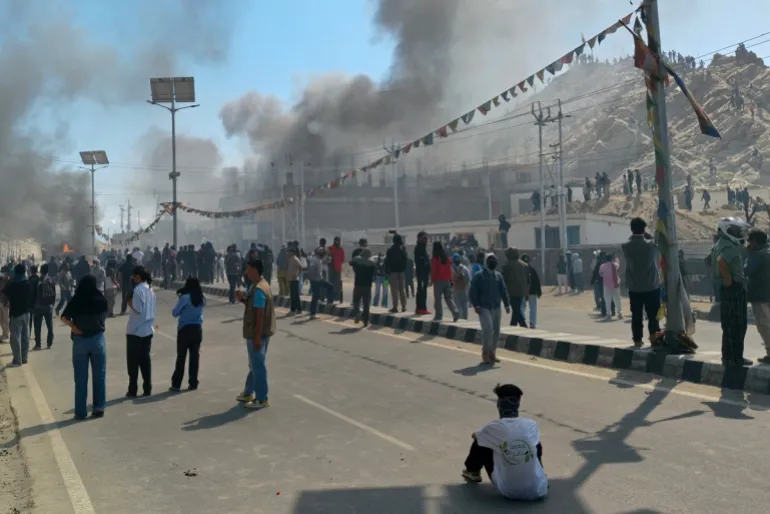
Wider Implications: Identity, Employment, and Governance
The protests underscore several critical issues facing Ladakh: preserving cultural identity, ensuring political representation, and tackling high youth unemployment rates. These demands reflect fears that without greater autonomy and protections, the region’s fragile ecology, unique traditions, and local livelihoods could be at risk. The strategic location of Ladakh along sensitive borders with China and Pakistan adds complexity to the situation, making peaceful resolution not only a local but also a national priority.
Hopes for Leh : Dialogue and Stability
In response to the crisis, talks between Ladakhi representatives and the central government have been scheduled to address these pressing demands. The outcome of these negotiations is eagerly awaited by both protesters and authorities, who seek to restore peace and chart a path toward enhanced self-governance for Ladakh. The region’s future hinges on balancing development needs, cultural preservation, and political empowerment in a way that prevents further unrest.
Political Fallout and Blame Game
The government attributed the unrest partly to provocative speeches by protest leaders, including Sonam Wangchuk, accusing them of inciting violence despite their calls for peaceful protests. Wangchuk ended his hunger strike amid the turmoil and appealed for calm, expressing regret over the violence. Meanwhile, political leaders from various parties have called for dialogue to resolve the crisis, emphasizing the need for a peaceful and democratic solution addressing Ladakh’s aspirations.
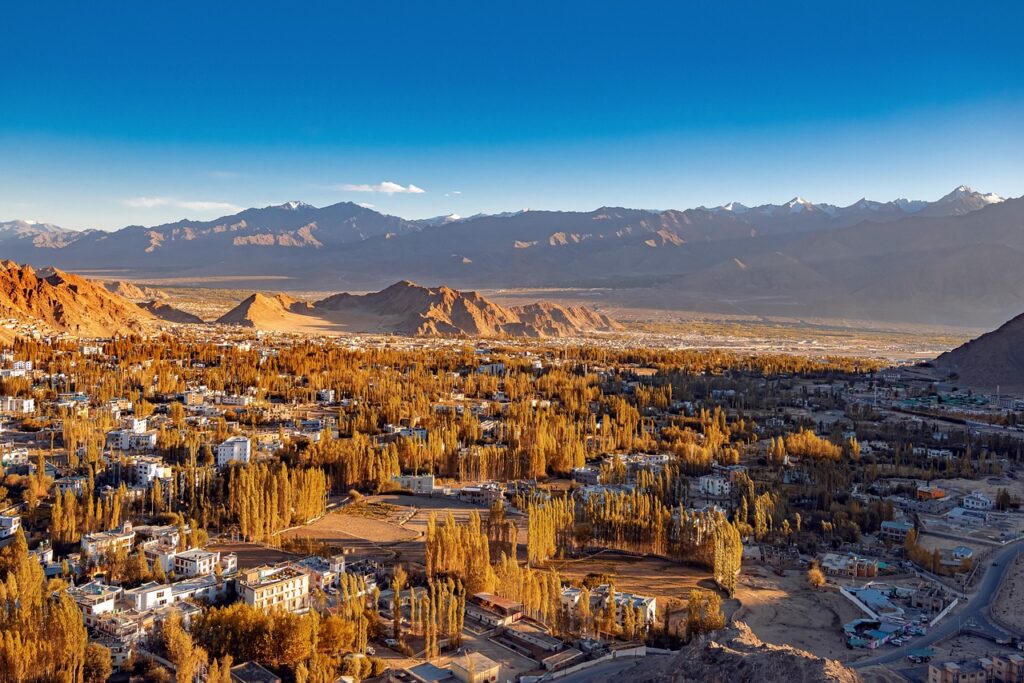
Leh’s Strategic Risks Amid Regional Youth Unrest
From a strategic perspective, the protests in Leh carry significant implications, especially when viewed alongside recent unrest in Nepal, Sri Lanka, and Bangladesh, where growing youth-led protests have led to major political upheavals and even government topplings. Leh’s unrest, driven by aggressive demands for statehood and autonomy, could be perceived as a potential flashpoint that, if left unaddressed, might escalate into a broader regional instability. Given Ladakh’s strategic location along sensitive borders with China and Pakistan, prolonged turmoil could weaken local governance and security infrastructure, creating vulnerabilities that external adversaries might exploit to further geopolitical agendas. Additionally, the youth-led nature of the protests mirrors trends seen in neighboring countries, raising concerns among policymakers about the possibility of similar disruptive outcomes. Thus, the situation in Leh is not just a local issue but a strategic challenge that demands careful management to prevent destabilization in a critical border region amidst an already volatile South Asian political landscape.
Timeline Summary of Key Events
| Date | Event | Details |
|---|---|---|
| September 10, 2025 | Hunger strike begins | Sonam Wangchuk leads 35-day fast demanding statehood and Sixth Schedule status |
| September 23, 2025 | Two hunger strikers hospitalized | Health deterioration prompts youth shutdown call |
| September 24, 2025 | Protests turn violent | BJP office arson, clashes with police, 4 protesters killed, curfew imposed |
| September 26, 2025 | Wangchuk detained | Arrested under National Security Act amid crackdown |
| October 6, 2025 | Scheduled talks halted | Ladakh leaders pull out citing violence and arrests |
| October 14, 2025 | Restrictions lifted | Curfew, internet ban lifted after 22 days, gradual return to normalcy |
| October 18, 2025 | Silent march and blackout | Planned peaceful protest to honor victims and press demands |
Latest Developments: October 2025
After 22 days of strict restrictions, including curfews and internet shutdowns, normalcy has slowly returned to Leh as of mid-October 2025. The local administration lifted curfews, reopened schools and shops, and eased internet restrictions. However, the struggle continues. The Leh Apex Body (LAB) and Kargil Democratic Alliance (KDA) announced a silent march and a blackout protest planned for October 18, 2025, to honor the slain protesters and press for demands including a judicial inquiry into the violence, release of detainees, and compensation for victims’ families. Protesters have been urged to wear black armbands, maintain silence, and refrain from music during celebrations for three months as a mark of respect.
Leh today embodies a profound juxtaposition of breathtaking natural beauty and urgent human concerns. Beneath its majestic landscapes lies a community passionately pursuing justice, dignity, and political empowerment through persistent demands for statehood and constitutional safeguards. This youth-led wave of protests reflects a collective desire not only to protect Ladakh’s unique cultural identity but also to secure meaningful political representation and address socio-economic challenges.
As Ladakh prepares for the upcoming silent march and blackout, hopes remain centered on productive dialogue and a peaceful resolution. How India responds will fundamentally shape Ladakh’s future and influence the broader discourse on governance and regional identity across the Himalayas. The region’s destiny now hangs in a delicate balance—where development, preservation of heritage, and equitable governance must converge to prevent further unrest and ensure lasting peace.